
MUSE Stem Cells Documentation:
COA Explained.
What to Demand Before Treatment
If you are searching for “MUSE stem cells in Mexico,” you’ll see a lot of confident marketing.
What you may not see is the one thing that makes any biologic treatment more verifiable:
documentation tied to the exact product batch used for your treatment.
The most important document patients should know is the COA.
In this article, you’ll learn:
- What a COA (Certificate of Analysis) is,
- why it matters specifically for MUSE stem cell claims,
- What a legitimate COA often includes,
- Red flags to watch for,
- How to request documentation without sounding confrontational.
What Is a COA (Certificate of Analysis)?
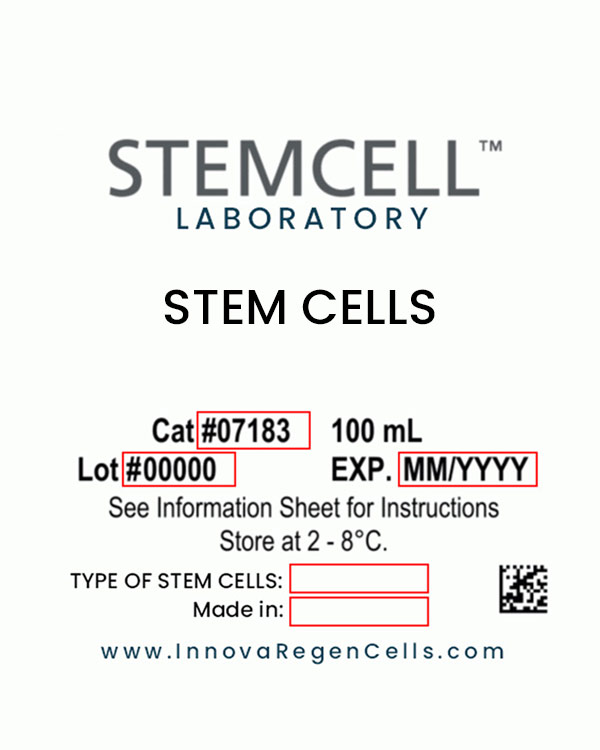
A COA is a lab report for a specific batch/lot of a product. In regenerative medicine, it helps answer:
- What is this product supposed to be?
- Was it tested for safety and quality?
- Does it meet release criteria?
Think of it like a “quality passport” for the batch—especially important when the product is biological and not a standard pill from a pharmacy shelf.
Why COA matters more when you see “MUSE” in Marketing
“MUSE” is often advertised as a premium or specialized cell type.
That increases the need for clear proof because:
Patients may pay more for “MUSE” treatments without clear proof. A COA helps confirm what’s being offered before you commit.
A COA won’t answer every question—but it can help confirm the clinic follows a documentation-first approach.
Without documentation, the patient cannot verify whether “MUSE” refers to a specific characterized product or a marketing label.
What a Strong COA Typically Includes
(Patient-Friendly Checklist)
When reviewing a COA, look for these elements:
Batch/Lot
Identification
- Lot number (batch number)
- Release date
- Expiration or storage window (where applicable)
Why it matters: If there is no lot number, the COA may not be tied to what you receive.
Product Identity / Characterization
This section may include:
- Identity markers or characterization results.
- Method used (e.g., lab test type).
For MUSE claims: it’s reasonable to ask what characterization supports the MUSE label.
Viability
(where applicable)
- Percentage of viable cells at release.
- Method used for viability measurement.
Why it matters: viability can affect quality and consistency.
Safety Testing
(Non-Negotiable)
A strong COA may include results for:
- Sterility (bacteria/fungi).
- Mycoplasma.
- Endotoxins.
Why it matters: these are key contamination risks.
Handling, Storage, and
Release Standards
- Storage temperature conditions.
- Transport considerations.
- Release criteria summary.
Why it matters: quality depends on handling, not just lab testing.
Lab Identity and
Accountability
- Lab name or identifier.
- Date of testing.
- Signature/authorization.
Why it matters: you want a traceable chain, not anonymous paperwork.
COA Red Flags
Patients Should Not Ignore
If you see these issues, ask follow-up questions:
- No lot number or batch info.
- A “generic” COA that seems identical for every patient.
- Missing sterility / endotoxin / mycoplasma results.
- No dates or unclear lab identity.
- Refusal to share documentation before a deposit.
- Pressure to “trust us” instead of showing proof.
A clinic can still be legitimate and have reasons for how they handle documents—but transparency is part of trust. The more expensive and complex the therapy, the more transparency matters.


How to Ask for a COA Without Creating Conflict
Here’s a patient-friendly script you can copy/paste:
“Before I book, can you share the COA (Certificate of Analysis) for the batch/lot that would be used in my treatment, including safety testing (sterility, mycoplasma, endotoxins) and lot identification?”
If they respond defensively, that tells you something. If they respond clearly and helpfully, that tells you something too.
Does a COA Guarantee Results?
No. A COA does not guarantee outcomes.
It primarily supports:
-
Product traceability,
-
Quality control
-
Safety testing transparency
Ethical clinics communicate this clearly and avoid guarantees.
“MUSE Documentation” Beyond the COA
A COA is important, but serious clinics also provide clarity on:
- protocol description (what is administered and how)
- eligibility criteria and contraindications
- informed consent documents
- follow-up plan
- adverse event escalation process
When clinics provide these items proactively, it’s a strong indicator of medical maturity.
How Innova Regen Cells Helps Patients Reviewing MUSE Offers
If you were offered “MUSE stem cells” in Mexico, Innova can help you verify the offer:
- Send the COA (or the documents you received).
- We’ll review what’s present and what’s missing.
- We’ll give you a checklist of questions to ask before paying.
Request a MUSE Documentation Review

Bottom Line
Documentation Is Your Leverage
In medical tourism, patients often feel they have less control. Documentation gives you control.
If a clinic can prove what they do, they’ll usually show you. If they can’t, you deserve to know that before you pay.
Related MUSE Resources
For the full step-by-step checklist and patient guide, see our
Complete Patient Guide to MUSE Stem Cells in Mexico.
MUSE Stem Cells: Approved? Legal vs Proven
COA Explained
(Documentation Guide)
Clinic Checklist
(Verify Before You Pay)
Use a proof-first checklist to compare MUSE clinics: COA, safety testing, traceability, screening, and follow-up.
At Innova Regen Cells
we care for people.
Experience the benefits of stem cell therapy and start your journey toward better health today.
Please take the next step with Innova Regen Cells and discover how our treatments can transform your life.
Disclaimer:
Educational content only; not medical advice.
Treatment decisions require physician evaluation. Outcomes vary, and no guarantees are made.
